
35mm Film Developing: Prices and Options
Share
Contents
- What determines the price of 35mm film developing?
- 35mm film developing and scanning: what to know
- Film developing costs by film type
- Disposable camera developing: price and process
- Developing and printing your film
- Turnaround time, shipping and what to avoid
- Frequently asked questions
Last updated: 12 October 2026
What determines the price of 35mm film developing?
The cost of developing 35mm film depends on the film type, the chemical process and the services you select. The total also depends on whether you want negatives only, digital scans or photographic prints.
Film type and developing process
Colour negative film uses the C-41 process, black-and-white film requires a different developer, and slide film uses E-6 chemistry. Each process has its own requirements and costs. Analog Film Lab handles all these standard film processes.
Black-and-white, colour negative and slide processing may have different prices depending on the laboratory. E-6 is a more specialised process and is often priced higher.
Developing only versus developing and scanning
Developing only gives you your physical negatives, which you can scan or enlarge yourself. Developing and scanning also provides digital files that you can share, edit and print. Developing without scans costs less initially, but you will need to digitise your negatives later if you want digital images.
35mm film developing and scanning: what to know
When choosing film scans, consider resolution, file format and the scanning equipment used by the lab. These affect both image quality and price.
Scan resolution and file format
Higher scan resolution captures more detail from the negative. A lower-resolution scan may be sufficient for sharing online and small prints; a higher-resolution scan provides greater flexibility for cropping and larger prints. JPEG files are compact and easy to use, while TIFF files retain more image information for editing where offered.
Noritsu scans and image quality
Professional Noritsu scanners are widely used in film labs because they deliver consistent, efficient results. Their software can make standard colour and contrast adjustments. These work well in many cases, but photographers with a specific colour or contrast preference may want to request tailored corrections. Analog Film Lab uses professional Noritsu scanning equipment.
Film developing costs by film type
The following figures are indicative price ranges from film-developing services, not a fixed Analog Film Lab price list. Always check the current options and total in the shop before ordering.
| Film type | Process | Develop only | Develop + scan |
|---|---|---|---|
| Black-and-white | B&W | Approx. €7.50–€10 | Approx. €12–€18 |
| Colour negative | C-41 | Approx. €7.50–€10 | Approx. €10–€16 |
| Slide film | E-6 | Approx. €12–€18 | Approx. €20–€30 |
These examples refer to a standard 36-exposure 35mm roll. Shipping, scanning resolution and order charges can change the total.
Colour film (C-41)
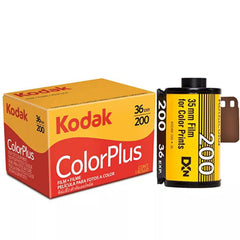
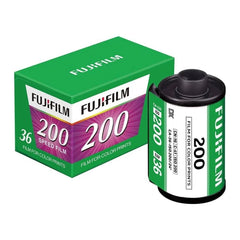
C-41 is the standard process for colour negative films such as Kodak Portra, Kodak Gold and Fujifilm Superia, as well as the film inside many disposable cameras. Many photographers add scanning to receive ready-to-use digital photographs.
Black-and-white film
Films such as Ilford HP5, Ilford FP4 and Kodak Tri-X can be processed by machine or manually, depending on the lab and film. Hand processing can offer additional control over development, while machine processing is designed for consistency and throughput.
Slide film (E-6)
E-6 processing creates a positive transparency rather than a colour negative. It requires precise chemical and temperature control and is offered by fewer labs. Slide film is particularly attractive to photographers who want transparencies for projection or archival use.
Price per photograph: a fair comparison
A typical 35mm roll contains 24 or 36 exposures. Divide the total order cost by the number of usable photographs when comparing services, rather than considering only the advertised developing charge.
Pro tip: Include shipping and any order fees in the comparison. A low developing charge does not always mean a lower overall cost.
Other factors affecting the cost
- Number of rolls: sending several rolls together can lower postage per roll.
- Scan resolution: higher-resolution options may cost more.
- File format: TIFF may be more expensive than JPEG where available.
- Print sizes and paper: larger photographs and paper finishes can affect the total.
- Express processing: faster service may carry a surcharge when available, particularly for E-6 and ECN-2.
Disposable camera developing: price and process
Disposable cameras usually contain colour negative film processed using C-41 chemistry. You can send or bring the complete camera to a lab: there is no need to open it yourself. The film is removed safely and developed just like a regular 35mm roll. You can choose scans or prints as well as the negatives. Pricing is generally comparable to standard 35mm processing, depending on your selected options.
Developing and printing your film
Some photographers want prints as well as digital scans. Ordering paper photographs adds another step and additional costs.
Print sizes and paper finishes
Popular print formats include 10 × 15 cm, 13 × 18 cm, 20 × 25 cm and larger sizes. Glossy paper can make colours and contrast look more vivid, while matte paper offers a subtler finish. The size, paper and number of prints influence the final price.
Calculating the total cost
Developing, scanning and printing all 36 exposures usually costs more than developing alone. A practical alternative is to scan the whole roll and order physical prints only of your favourite photographs.
| Service | What you receive | Best suited to |
|---|---|---|
| Develop only | Developed negatives | Photographers who scan or enlarge at home |
| Develop + scan | Negatives and digital photographs | Most everyday film photographers |
| Develop + prints | Negatives and paper photographs | Anyone wanting physical prints |
| Develop + scan + prints | Negatives, digital files and prints | Anyone wanting the complete package |
Turnaround time, shipping and what to avoid
Shipping costs and turnaround times can make a significant difference to the overall experience. Compare the full order, not just the film-processing price.
Compare the true total
| Cost item | What it covers | Illustrative range |
|---|---|---|
| Developing | Chemical processing | €7.50–€20 per roll |
| Scanning | Digital files | €10–€20 per roll |
| Printing | Paper photographs | €0.15–€0.50 each |
| Shipping to the lab | Sending your film | €4.95 |
| Return postage | Returning negatives or prints | €4.95 |
| Order fees | Additional handling charges | €0–€3 |
The amounts above illustrate potential costs and are not a quotation. For example, a lab charging €6 for processing plus €7 return postage may cost more than a lab charging €9 for processing with free return shipping.
Example: the real cost of one roll
If you send five rolls together, postage and any fixed order fees are spread across more rolls. This reduces the average additional cost per roll, which is why some photographers collect several exposed rolls before sending them in.
Turnaround and processing time
At Analog Film Lab, standard C-41 colour film and black-and-white film are usually developed and scanned on the same day they arrive, depending on the drop-off time and workload. Specialised processes such as E-6 and ECN-2 may take longer. Postal delivery time is additional.
Shipping film safely
- Use sturdy protective packaging, such as a padded envelope.
- Keep unprocessed film inside its cartridge or protective wrapping and away from strong light.
- Avoid leaving film in extreme heat, such as in a parked car.
- Include your name and order number clearly inside the package.
- Keep your proof of postage until delivery is confirmed.
Important: Never send your film loose in an ordinary paper envelope. Protect it from crushing, moisture and unnecessary exposure to light.
Drop off, post or use a dropbox
You can mail your rolls to Analog Film Lab, drop them off in person in The Hague, or use our 24/7 film dropbox at Paviljoensgracht 5, The Hague. Mailing is convenient if you live farther away; in-person drop-off avoids outward postage and postal delays.
Which developing option suits you?
- Develop only: ideal if you scan your own negatives or make darkroom enlargements.
- Develop + scan: a balanced option for sharing, editing and archiving photographs.
- Develop + prints: best if you primarily want paper photographs.
- Develop + scan + prints: choose this for both digital and physical photographs.
Key takeaway: The cheapest developing price is not necessarily the cheapest overall order. Compare scans, prints, shipping and fixed fees. Analog Film Lab offers postal delivery, in-store drop-off and a 24/7 dropbox in The Hague.
Frequently asked questions
How much does it cost to develop 35mm film?
The price depends on the film type, processing method and whether you want scans or prints. Developing only generally costs less than a package with scans. Check the online shop for the current price and options for your specific film.
What is the difference between developing only and developing with scanning?
Developing only gives you processed physical negatives. Developing and scanning gives you digital photographs as well, ready to share, edit, archive and print. Scan size and resolution can affect the total cost.
Can I have a disposable camera developed?
Yes. A lab can safely remove and process the film from your disposable camera. You can order digital scans, paper prints or both, depending on the service.
How long does developing and scanning take?
Turnaround depends on the lab, film type and workload. At Analog Film Lab, standard C-41 and black-and-white film are usually ready the same day after receipt, depending on the drop-off time and workload. Postal delivery and specialist processes such as E-6 and ECN-2 can take longer. Check current turnaround information when ordering.