
C-41 and Slide Film Processing: The Difference
Contents
- What is the difference between C-41 and slide film processing?
- Identifying C-41 film and preparing it for processing
- Colour negative and slide film: the differences in practice
- Processing E-6 slide film: step by step
- Slide film processing: at home or at a professional lab?
- What happens if you process slide film in C-41?
- Common mistakes and how to avoid them
- Conclusion: the right choice for your photography
- Frequently Asked Questions
Last updated: 11 October 2026
What is the difference between C-41 and slide film processing?
C-41 and slide film processing are two different chemical processes for colour film. C-41 produces negatives (a dark image on a transparent base), while E-6 slide film produces transparencies (a positive image that can be projected directly).

C-41 colour negative film: how it works
C-41 is the standard process for colour negative film. After processing, you get a negative: dark areas appear light on the film, bright areas appear dark, and the colours are reversed. This negative is scanned or printed, reversing the colours and tones to produce a positive image.
C-41 is robust and forgiving: underexposed or overexposed film can usually be corrected during scanning, making C-41 popular with photographers who want flexibility.
E-6 slide film: how it works
E-6 slide film works differently: processing produces a positive image that can be projected directly. The colours are rich and vibrant in the finished transparency. However, E-6 is less forgiving of exposure errors: underexposed slides look dark, while overexposed slides lose highlight detail. This requires more accurate metering than C-41.
Identifying C-41 film and preparing it for processing
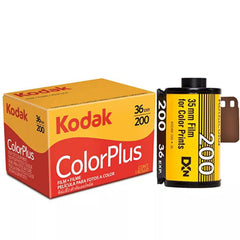
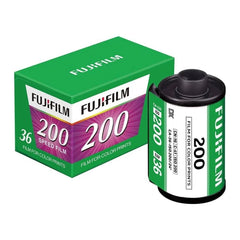
C-41 film often comes in yellow or orange packaging marked "Color Negative". Well-known examples include Kodak Gold, Kodak UltraMax and Fujifilm Superia. Always check the expiry date: expired film can produce colour shifts.

To send film to our lab, place it in a protective envelope or box and enter your order details on our website. We process it in C-41 and scan it with our Noritsu scanner to produce digital files.
Colour negative and slide film: the differences in practice
Image results and colour reproduction
C-41 colour negative film:
- The image is reversed: dark becomes light and light becomes dark
- The colours are reversed: red becomes cyan and green becomes magenta
- Wide exposure latitude, allowing some underexposure and overexposure
- Plenty of scope for colour correction and tonal adjustments during scanning
- Contrast in the negative itself is moderate to low (this is normal)
- Suitable for photographers who want flexibility and editing options

- The image is positive: what you saw is what you see
- Colours are direct: red stays red and green stays green
- Narrow exposure latitude: more than half a stop of underexposure can make the image noticeably dark, while more than half a stop of overexposure can blow out highlights
- Limited scope for colour correction without losing quality
- Higher contrast and natural saturation in the finished image
- Suitable for photographers who meter carefully and want minimal editing
Contrast and dynamic range
C-41 dynamic range: Approximately 12–13 stops, capturing plenty of detail in both shadows and highlights. You can photograph a backlit scene and recover both the face and the sky during scanning.
E-6 dynamic range: Approximately 5–6 stops, which is considerably narrower. In backlight, you need to choose: expose for the face and the sky may blow out, or expose for the sky and the face may turn black. This is designed for projection, where that range is sufficient.
In practice, C-41 tolerates less precise exposure and is ideal for reportage and street photography. E-6 requires careful metering and is ideal for studio photography and landscapes in stable light.
Colour saturation and natural-looking results
E-6 slides naturally have stronger colour saturation than C-41 negatives. Many photographers find that E-6 delivers a more natural, vivid colour palette without editing, making it popular for commercial photography. C-41 feels more neutral: it provides a starting point for editing.
Practical comparison: which film for which situation?
| Situation | C-41 | E-6 |
|---|---|---|
| Unpredictable lighting conditions | ✓ Better | ✗ Risky |
| Extensive editing or post-processing required | ✓ Better | ✗ Less flexibility |
| Minimal editing required | ✗ Less suitable | ✓ Better |
| Backlighting or high contrast | ✓ Better | ✗ Difficult |
| Rich, vibrant colours straight from the film | ✗ Less | ✓ Better |
| Home processing | ✓ Easier | ✗ More difficult |
| Professional lab available | ✓ Yes | ✓ Yes (fewer labs) |
Processing E-6 slide film: step by step
Processing stages and chemistry
E-6 processing includes first development, colour development, and bleaching and fixing.
In a simplified E-6 process, first development creates a black-and-white negative image, colour development forms the dyes, and bleaching and fixing remove the silver image and remaining silver halides. After washing and drying, you have a positive transparency.
Temperature and processing time
E-6 requires accurate temperature control (38°C ±0.5°C) and timing (first development: 6 minutes, colour development: 6 minutes, bleach: 6–7 minutes). A difference of one minute can cause visible colour shifts. At Analog Film Lab, we use professional equipment that controls temperature and timing automatically.
Slide film processing: at home or at a professional lab?
Costs: initial investment, per roll and overall
Comparing home and professional processing costs involves more than chemistry versus lab fees: you need to consider the total investment and the break-even point.
Home E-6 processing:
- E-6 chemistry (one kit, enough for 10–15 rolls): €40–€80
- Thermostat or temperature-controlled water bath: €30–€100
- Developing reel and tank (if you do not already own them): €15–€40
- Total initial investment: €85–€220
- Cost per roll (chemistry, water and waste): €2–€4
- Break-even point: after 10–20 rolls
Professional E-6 processing and scanning:
- Cost per roll (processing and scanning): €8–€15
- No initial investment
- Turnaround time: 7–10 working days
- Quality assurance: high, consistent standards
Practical calculation:
- 1–2 rolls per month: professional processing is cheaper (€96–€180 per year)
- 5–10 rolls per month: home processing becomes economical after 3–6 months (€24–€48 per month at home versus €40–€150 professionally)
- 15+ rolls per month: home processing is clearly cheaper (€30–€60 per month at home versus €120–€225 professionally)
Equipment and skills needed for home processing
Processing E-6 at home takes more than chemistry alone. You also need control.
Essentials:
- Developing reel and light-tight tank to protect the film from light
- Thermostat or water bath with accurate temperature control (±0.5°C)
- Thermometer (digital is preferable to analogue)
- Timer (a smartphone app is sufficient)
- Measuring jugs and stirring rods
- A clean, dust-free workspace
Strongly recommended:
- A temperature-controlled water bath (€50–€100) instead of a manually adjusted bath
- Digital thermometer with an alarm (€15–€30)
- Darkroom or changing bag for loading the reel
Skills: Processing E-6 at home requires precision and patience. You need to:
- Keep the temperature constant (38°C ±0.5°C) for more than 30 minutes
- Follow timings precisely (first development: 6 minutes, colour development: 6 minutes, bleach: 6–7 minutes)
- Agitate the reel regularly by rotating or inverting the tank to distribute the chemistry evenly
- Keep the film protected from light throughout the light-sensitive processing stages
An error of 30 seconds or 0.5°C can cause visible colour shifts. This is why many photographers choose professional processing.
Quality: professional versus home processing
- An automatic machine controls temperature, timing and agitation
- Chemistry is refreshed daily (old chemistry causes colour shifts)
- Consistency: the same quality, roll after roll
- Scanning with a professional scanner (Noritsu, Fuji or equivalent)
- Colour correction follows established standards
- The result: predictable, repeatable and professional
At home:
- Manual control: more variation, even with care
- Chemistry ages more quickly (opened bottles can deteriorate within weeks)
- Variation: one roll may differ from the next, even when you follow the same steps
- Scanning with your own scanner, which is often less accurate than professional equipment
- You are responsible for colour correction
- The result: less predictable, but potentially artistically interesting
Many home processors enjoy this variation: it gives their work a handmade quality. But if you want consistency, professional processing is the better option.
Availability of chemistry and processing services
E-6 chemistry in the Netherlands: E-6 chemistry is harder to find than C-41. Many Dutch photography shops do not keep it in stock. You can order it online, for example from international suppliers, but shipping costs (€10–€20) and delivery times (3–7 working days) need to be considered.
Popular E-6 brands:
- Kodak E-6 (hard to find; many shops have discontinued it)
- Fujifilm Eterna E-6 (more readily available, but more expensive)
- Tetenal Colortec E-6 (good availability and reliable)
Professional labs: There are fewer E-6 labs than C-41 labs in the Netherlands. Many stopped offering E-6 as demand declined. However, specialist labs, particularly in larger cities, still offer it. Turnaround is usually 7–10 working days.
Kodak Gold 200 35mm – 36 exposures →
Choosing between home and professional processing
Choose home processing if:
- You develop more than 10 rolls per month and want to save on costs
- You enjoy experimenting and accept variation
- You have the patience for precise temperature control
- You have a good scanner or are willing to invest in one
- You live in an area without an E-6 lab
Choose professional processing if:
- You shoot fewer than 5 rolls per month
- You want consistency and quality assurance
- You would rather avoid temperature control and precise timing
- You do not have a darkroom or changing bag
- You want your slides scanned professionally
- You would rather spend your time taking photographs than working in a lab
What happens if you process slide film in C-41?
This is a common question. The answer: it works, but the result is not what you would normally expect.
Processing E-6 slide film in C-41 produces a negative with reversed colours. The image can be very dark and the colours unnatural. It can be scanned, but significant correction may be needed in post-processing.
Why does this happen? C-41 is designed for negative film. Its development stage forms an image in the exposed areas. E-6 slide film responds differently, producing a different result.
The result can still be scanned and edited digitally. However, this cannot reverse the chemical processing or turn it back into a conventionally processed slide.
The reverse also produces a very different result: processing C-41 film in E-6. This is known as cross-processing and can create interesting artistic effects.
Common mistakes and how to avoid them
Mistake 1: forgetting the film type
You send film to a lab and forget to specify whether it is C-41 or E-6.
How to avoid it: clearly state the film type on your order form. Check the film packaging.
Mistake 2: expired E-6 chemistry
E-6 chemistry deteriorates with age. Even sealed bottles have a limited shelf life. Old chemistry causes colour shifts.
How to avoid it: buy fresh E-6 chemistry. Check the expiry date and store it in a cool, dark place.
Mistake 3: poor temperature control
You try E-6 at home, but your water bath does not stay at 38°C. The temperature fluctuates and your film develops colour shifts.
How to avoid it: use a thermostat and check the temperature regularly. Work efficiently so the chemistry does not cool down, or choose professional processing.
Mistake 4: overlooking exposure errors
You shoot E-6 without accurate metering and the slide is underexposed.
How to avoid it: meter carefully with a light meter. Take test shots and learn how your camera works. E-6 leaves little room for mistakes.
Conclusion: the right choice for your photography
C-41 colour negative film is flexible, forgiving and easy to use. You can correct exposure errors and have plenty of control in post-processing. It is ideal if you enjoy experimenting or shoot a lot.
E-6 slide film delivers beautiful, saturated colours with minimal editing. It requires accurate metering and careful handling. It is ideal if you enjoy classic analogue photography and prefer to keep editing to a minimum.
Which should you choose? That depends on how you work.
- Shoot a lot and want flexibility? Choose C-41.
- Meter carefully and want beautiful colours without editing? Choose E-6.
- Want to try both? Buy some C-41 and E-6 film and experiment.
At Analog Film Lab, we develop and scan both types. Our Noritsu scanners are designed for colour film and deliver accurate digital files. With more than 120 years of film processing experience, your film is in good hands.
Send us your film or visit our shop in The Hague. We are happy to help you choose the right film and processing method for your photography.
Frequently Asked Questions
What is the difference between C-41 and slide film?
C-41 produces a colour negative that needs to be scanned or printed to view the positive image. Slide film (E-6) produces a positive transparency that can be viewed directly on a lightbox. C-41 uses different chemistry and processing stages from E-6. The image characteristics also differ: slide film offers stronger contrast and vividness, while C-41 provides more flexibility in exposure and editing.
Can I process slide film in C-41?
It is not recommended for conventional results. Processing slide film in C-41 chemistry produces a negative with altered colours and contrast. E-6 chemistry is specifically designed for slide film. For the intended image results, always use the processing method specified for your film.
How can I tell whether my film is C-41 or slide film?
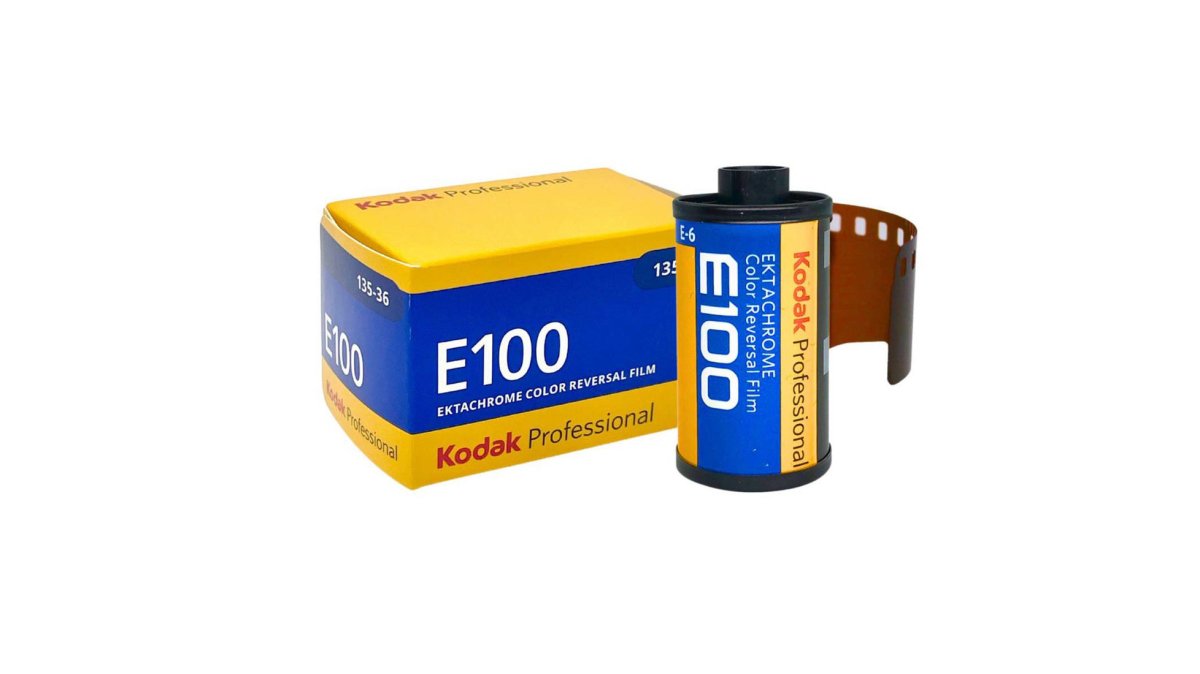
Check the film container or packaging for labels such as 'C-41', 'colour negative' or 'slide/E-6'. C-41 packaging usually says 'colour negative'. Slide film is marked 'slide', 'E-6' or 'colour reversal'. The film's edge markings also contain information. If in doubt, contact a professional lab.
How much does slide film processing cost?
Professional labs offer E-6 processing with scanning. Costs vary according to film format (35mm or 120), scan resolution and the number of rolls. Analog Film Lab offers professional Noritsu scanning. Contact us for exact prices and turnaround times, or submit your film by post or through a dropbox.
Many photographers wonder which film and processing method best suits them. At Analog Film Lab, we help with this every day. We process C-41, E-6, black-and-white film and more. Our professional Noritsu scanners deliver digital files that are ready to use. CHOOSE YOUR FILM & OPTIONS → and send us your film. Turnaround is 7–10 working days, and you receive edited digital files.