
C-41 film developing: process, chemistry and E-6 differences
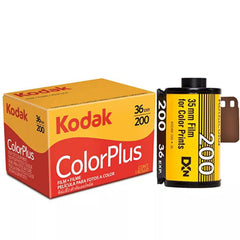
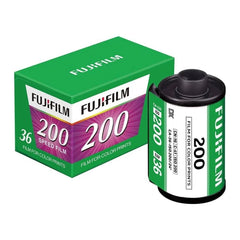
C-41 is the developing process for film labelled for C-41 colour negative processing, such as Kodak Gold and Portra. Development forms image dyes, after which silver compounds are removed. The result is a negative that can be scanned or printed.
Updated 5 October 2026 · Analog Film Lab by Foto Americaine
How does the process work?
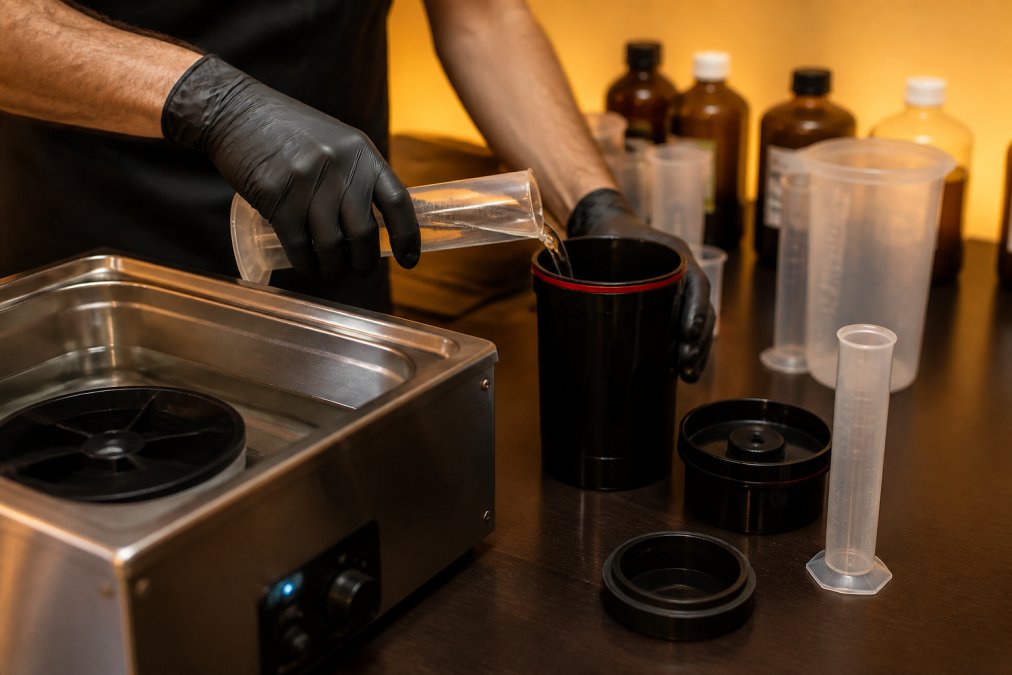
Colour development, bleaching and fixing are the core stages. Some kits combine bleach and fixer in one bath; other systems keep them separate. Washing and the specified final bath complete the relevant workflow. The exact sequence depends on the chemistry system: follow the instructions for your kit or processor.
Why does temperature matter?
Temperature, development time and agitation affect colour and contrast. Many C-41 systems operate around 38 °C, but follow the manufacturer's exact instructions and tolerances. A single general time or temperature is not a complete recipe for every kit. Use a suitable thermometer and stable water bath.
Preparing to develop at home
Load undeveloped C-41 film into a suitable light-tight tank in complete darkness. Prepare labelled measuring jugs, a timer and the required baths beforehand. Mix and use chemicals as instructed, keep baths separate and prevent developer contamination. Record mixing dates and film throughput; capacity and keeping times vary by product and storage.
C-41, black-and-white, E-6 or ECN-2?
| Film | Usual process | Result |
|---|---|---|
| C-41 colour negative film | C-41 | Colour negative |
| Traditional black-and-white film | Appropriate black-and-white processing | Silver-image negative |
| E-6 slide film | E-6 | Positive slide |
| ECN-2 motion-picture negative film | ECN-2 | Colour negative |
Check the film markings. ECN-2 film with remjet requires suitable processing; do not submit it unlabelled as ordinary C-41. ILFORD XP2 SUPER is a familiar black-and-white exception designed for C-41.
Develop at home or use a lab?
Home developing offers control and requires careful work, equipment and a separate scanning or printing solution. A lab handles those processing steps for you. Compare your actual film volume, chemistry capacity and complete costs rather than assuming a universal break-even point. Analog Film Lab offers C-41 developing with or without scans.
A colour cast or missing detail: what next?
An unusual result may relate to exposure, lighting, film storage, processing or scanning. Do not diagnose a chemical fault from one colour in a scan alone. Keep the negatives and note the film type and exposure information so the lab can help assess it.
Frequently asked questions
Can every colour film be processed in C-41?
No. Slide film, motion-picture film and historical materials may require another process. Read the label and ask for advice before processing if unsure.
How long does C-41 take at Analog Film Lab?
Many regular orders take approximately 1–2 working days after receipt, excluding transport. Check the current schedule and any special requests when ordering.
Kodak: Process C-41 minilab processing reference
Related guides
View film developing, scan options and current prices · Ask our lab for advice